
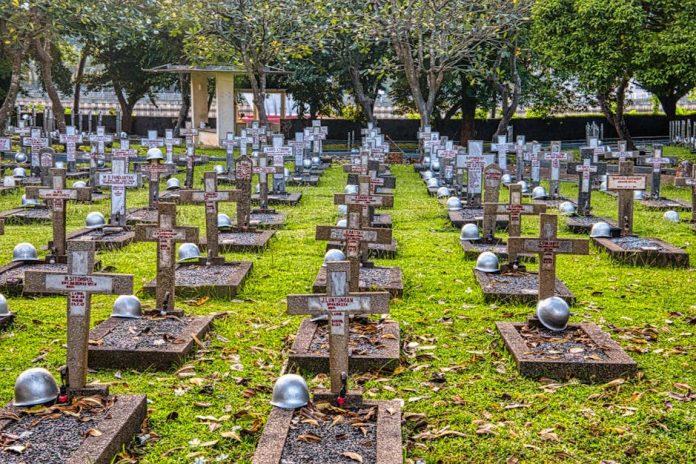
Ceremony Honors Victims of Recent Conflict
The funeral ceremony at Giripeni Heroes Cemetery in Kulon Progo regency marked a somber tribute to soldiers and civilians who perished in a recent conflict. Held on a misty morning, the event drew hundreds of mourners, including local leaders and families of the deceased. A military band played traditional Indonesian melodies, their notes echoing across the cemetery’s stone-lined pathways.
The ceremony began with a solemn procession of flag bearers, followed by a moment of silence to honor the fallen. Officials laid wreaths at the central memorial, a structure carved with names and dates of the victims. Among the attendees was Lieutenant Colonel Suryadi, who described the event as a “necessary step to acknowledge sacrifice and rebuild trust.”
The ceremony’s timing coincided with a regional ceasefire agreement, raising questions about its symbolic role in the peace process.
Local activists noted the event’s potential to unite communities divided by the conflict’s aftermath.
Community and Officials Pay Tribute at Kulon Progo Site
Residents of Kulon Progo, many of whom lost loved ones, gathered in the cemetery’s shaded gardens, where the air was thick with incense and whispered prayers. A local priest led a prayer service in Bahasa Indonesia, while children placed small white flowers at the memorials. “This place is our shared grief,” said Aminah, a mother who lost her son in the conflict.
“We need to remember them, not just in words.”
Officials emphasized the event’s dual purpose: to honor the dead and to reaffirm regional solidarity. Governor Budi Wibowo stated, “The cemetery is a symbol of our collective resolve to heal.” He announced plans to expand the site into a memorial park, a project backed by international aid groups. The proposal, however, faces opposition from some families who fear commercialization of the site.
The ceremony also featured a digital archive of the victims’ stories, unveiled by a tech firm partnered with the local government. While praised for its innovation, critics argued the archive lacks personal narratives, reducing individual tragedies to data points.
Legacy of Sacrifice Shapes Regional Remembrance
As the sun dipped behind the hills of Kulon Progo, the cemetery’s memorials stood as a testament to the enduring impact of the conflict. The event’s organizers hope the ceremony will inspire ongoing dialogue about accountability and reconciliation. “This isn’t just about the past—it’s about how we choose to live now,” said human rights activist Dian Sari.
The ceremony’s legacy, however, remains uncertain. While some see it as a step toward unity, others view it as a political gesture. Local journalists reported that tensions linger over unresolved grievances, with some families demanding more transparency about the conflict’s causes.
The government’s proposed memorial park, meanwhile, has sparked debates about whether it will serve as a healing space or a tool for political capital. Despite these divisions, the event’s emotional resonance is undeniable. As the final wreath was placed, a young boy placed a single flower on his grandfather’s name.
Conclusion
The ceremony at Giripeni Heroes Cemetery encapsulates the fragile balance between remembrance and reconciliation in Kulon Progo. As the region grapples with its past, the event’s enduring legacy will depend on whether its symbolic gestures translate into tangible steps toward healing—a question that lingers as the sun sets over the memorials.
Read more: Fuel Poverty: Worst Hit Areas Revealed as Two in Five Households Set to Be Affected